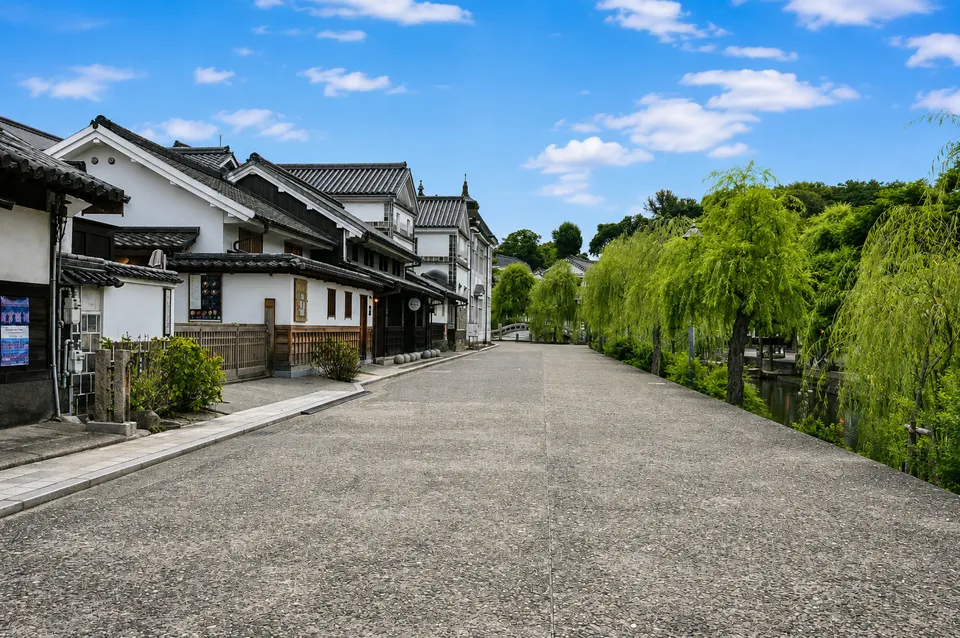
Details in the white-wall townscape
Kurashiki townscape guide
Read short explanations of the walls, windows, river and bridges, with places to see them.
View the first topic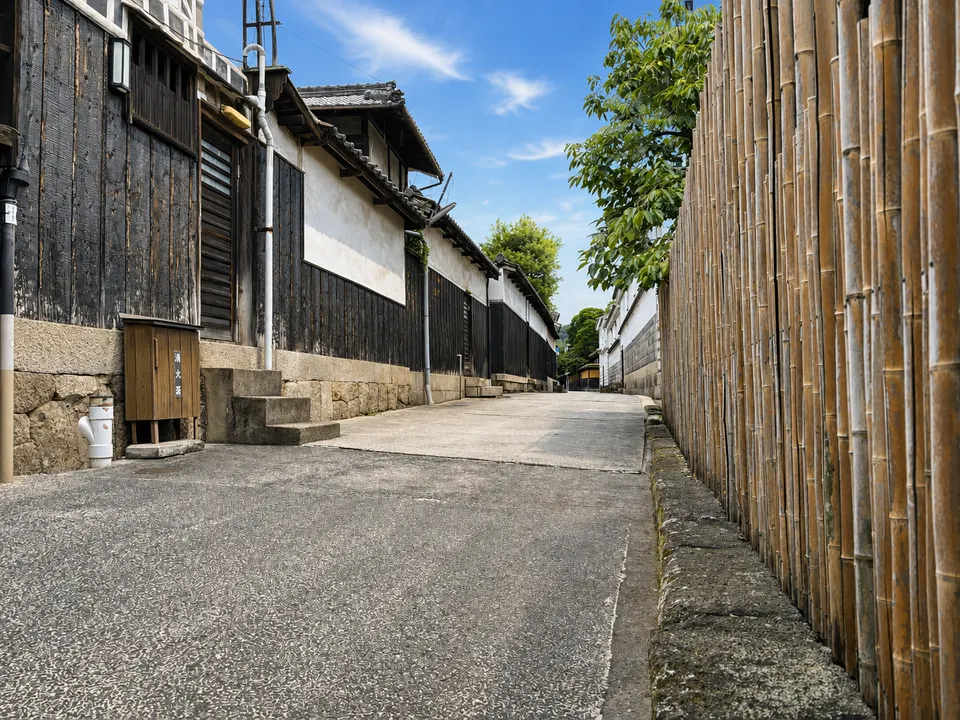
What changes one street away?
Honmachi and the riverside
Honmachi and Higashimachi retain streets shaped by the merchants who lived here. They remain residential neighborhoods today.
Read the guideView on the map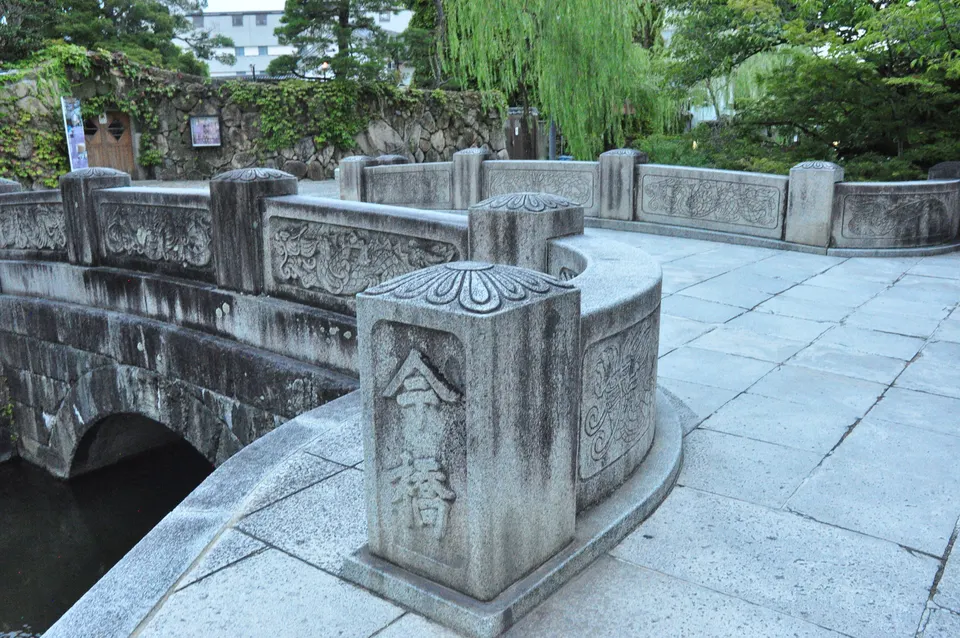
What can you find carved into the bridge?
Imahashi Bridge
This stone bridge stands in front of the Ohara Museum of Art. Look for dragon carvings along its sides.
Read the guideView on the map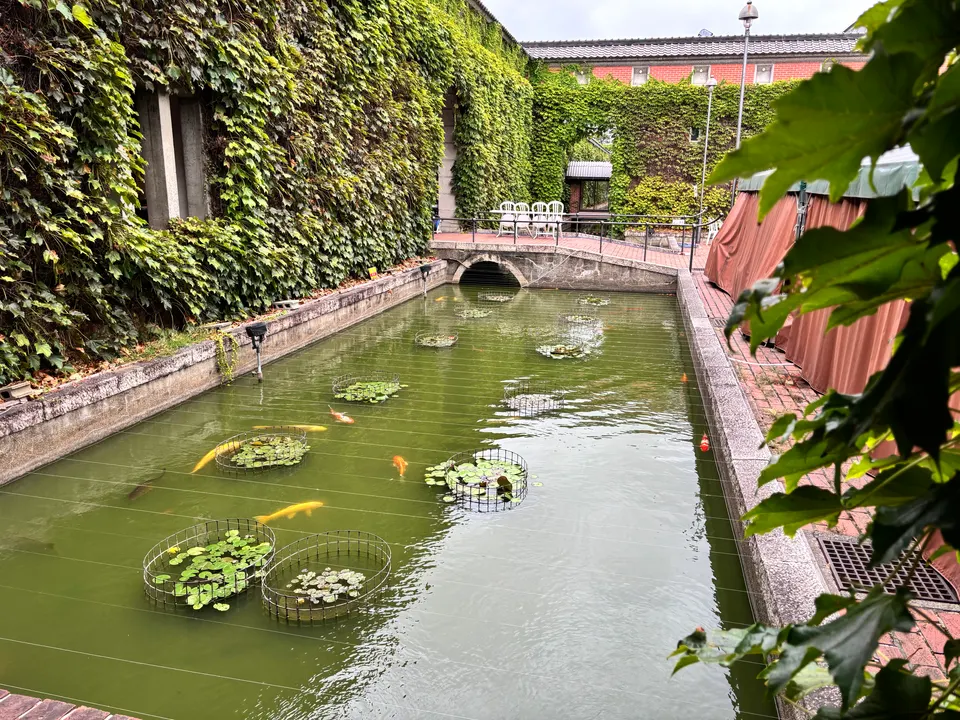
What was this site used for?
Red brick and ivy
Kurashiki Ivy Square reuses buildings from a spinning mill founded here in 1889.
Read the guideView on the map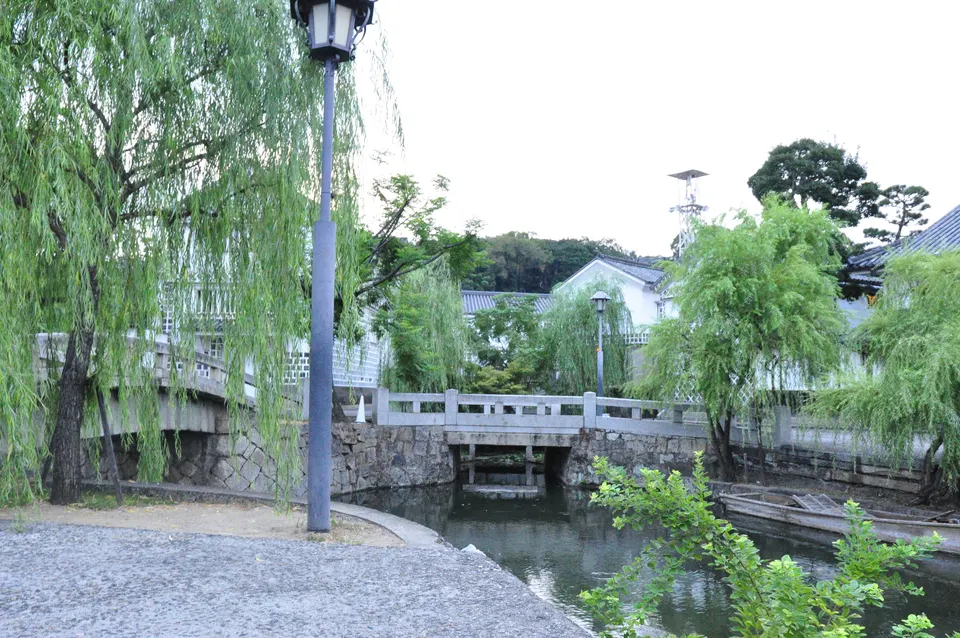
Why does the river run through town?
The river and the town
The river district grew as a center for collecting and moving goods. Storehouses and townhouses still show that history.
Read the guideView on the map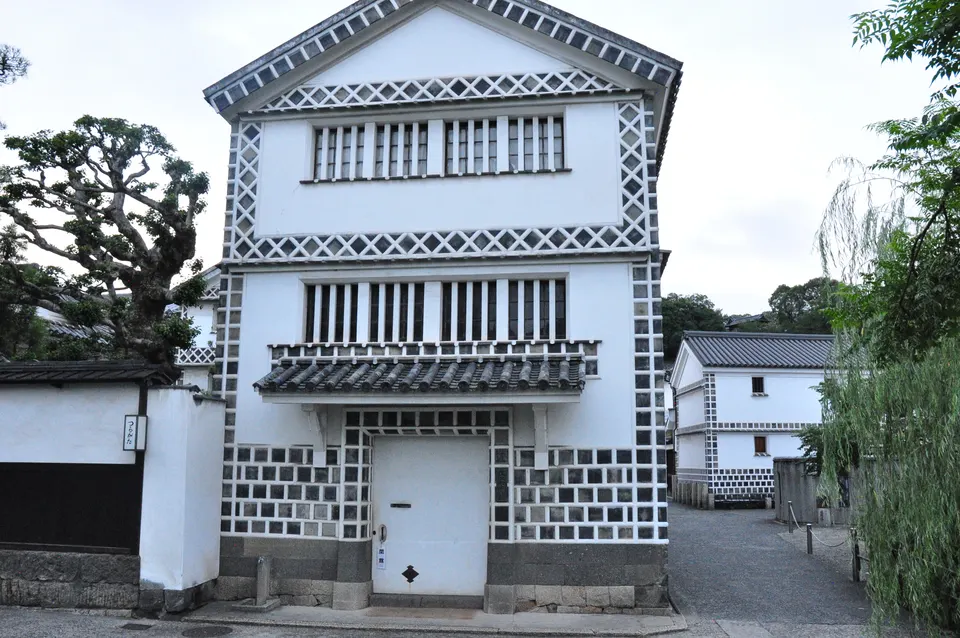
Why are the upper windows so small?
Kurashiki windows
Plastered lattice windows are a feature of Kurashiki townhouses. Compare their shapes as you walk.
Read the guide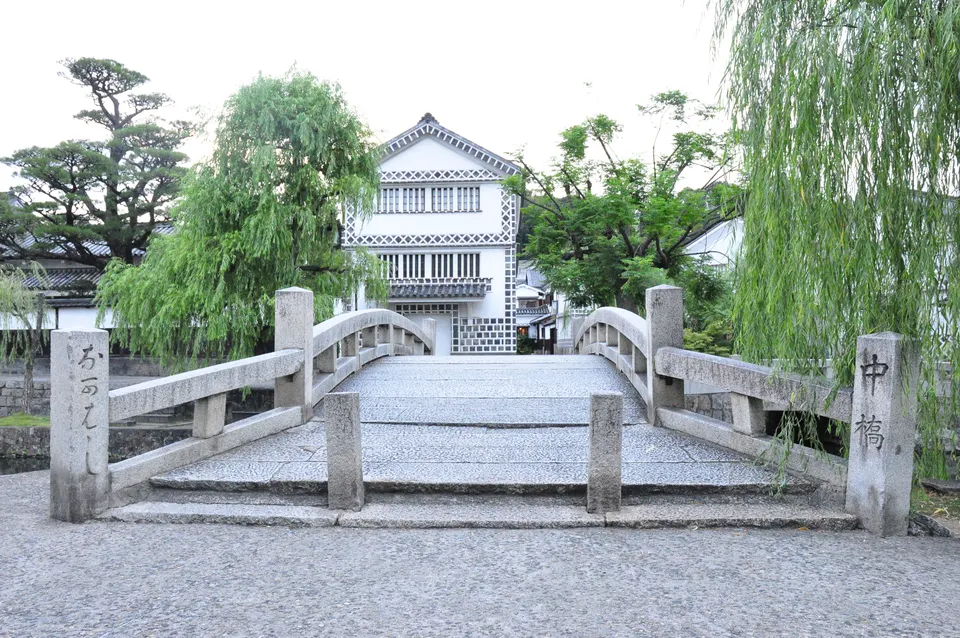
What can you see on either side?
A view from Nakahashi Bridge
This stone bridge crosses the river between Kurashiki-kan and the archaeological museum, bringing the riverfront elements into one view.
Read the guideView on the mapWhat is the white lattice pattern?
White walls and namako walls
Tiles cover the wall, with raised white plaster along the joints. Look for the repeating grid on storehouses.
Read the guideView on the mapFind a nearby guide
Only guides linked to a verified place are shown. Your location is not stored.
People live and work in these streets. Stay out of private property and keep narrow lanes clear.